Key Takeaways:
- Service requests for behavioral health care have risen 62% since 2018, straining provider caseloads.
- Standard EHRs meet basic documentation requirements but often miss behavioral-health-specific tools like DSM-5 templates and safety check tracking.
- Combining EHR and case management into one platform cuts duplicate data entry and improves care coordination.
- PlanStreet gives behavioral health organizations a single, customizable platform for documentation, coordination, and billing.
Mental health is an emerging need in the United States, with 23% of adults living with a mental illness. Behavioral health is a critical aspect of a functioning society because it affects how people think, feel, act, and cope with stress. Those patterns shape both mental and physical well-being. When people are stressed or suffering from substance abuse, it affects relationships, daily functioning, and long-term health outcomes.
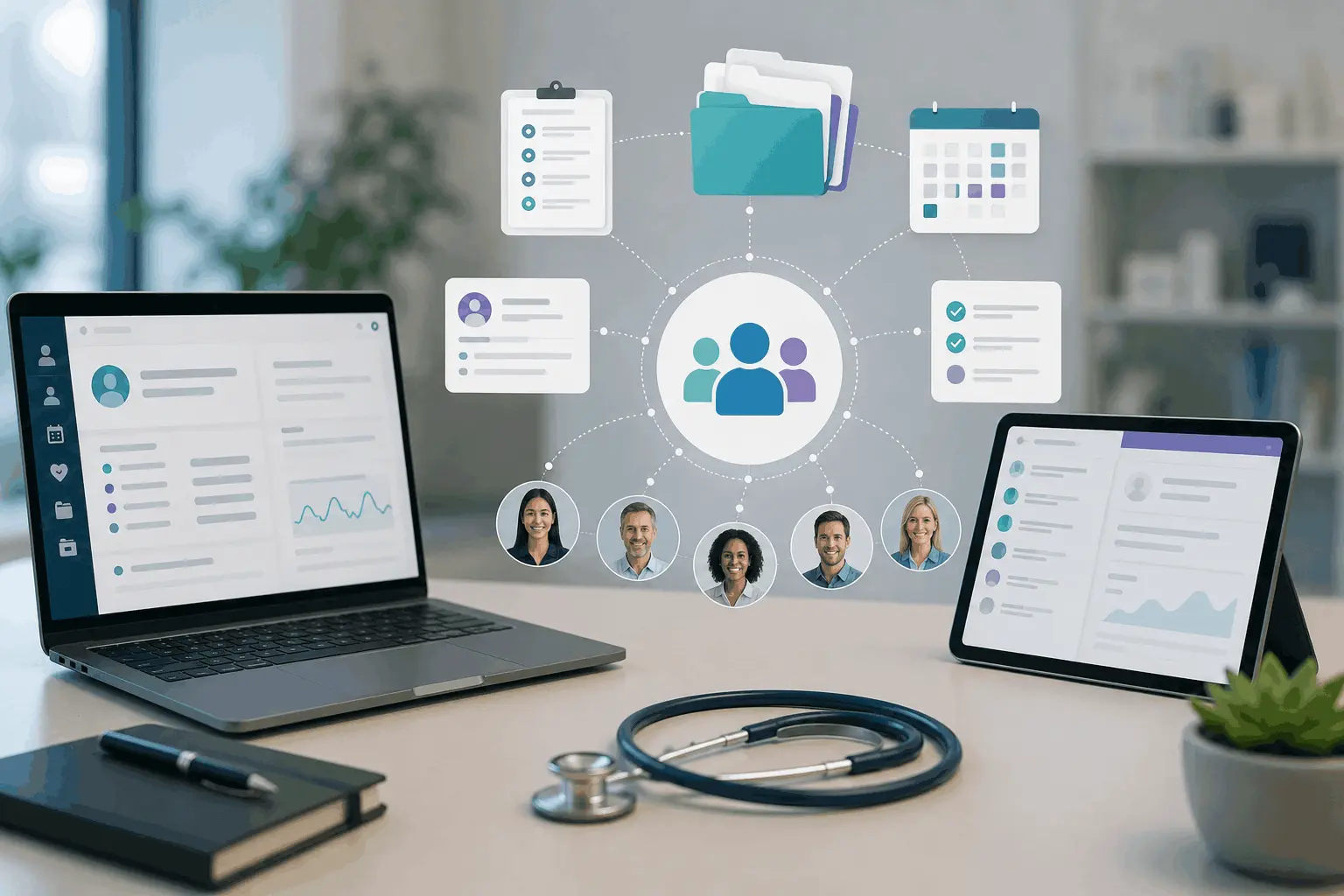
The demand for behavioral health care continues to rise, with a 62% increase in service requests since 2018. With more people seeking care, mental health providers must consider utilizing digital tools to ensure they are able to keep up with caseloads.
However, there are many different layers when it comes to behavioral health software. CMS (Centers for Medicare & Medicaid Services) and other regulatory bodies in the US set the requirements for EHRs (electronic health records), but there is a wide variety of options on the market. This article will dive into different solutions and explore how case management software can bridge the gap between a health record and delivering care.
EHRs: Benefits and Limitations for Behavioral Health Providers
As required by the CMS, Medicaid and Medicare providers must use EHRs that structure data to aid in patient care. An EHR creates a central place where providers can document treatment, prescriptions, referrals, billing, and more. However, behavioral health care providers may need extra tools, such as consent to share information or a specific note template, that a standard EHR may not have.
Benefits of EHRs
Some of the benefits of EHRs for behavioral health providers include:
- Better access to longitudinal patient information, which supports more complete clinical decision-making and integrated care.
- Improved communication among providers and teams through shared documentation, tasking, and coordinated care plans.
- More accurate documentation and coding, which can reduce claim denials and reimbursement errors.
- Easier tracking of outcomes, screenings, referrals, and follow-up over time.
- Support for safety features such as alerts, reminders, and medication oversight.
Limitations of EHRs
Some of the limitations of EHRs for behavioral health providers include:
- Many EHRs lack behavioral-health-specific templates for screening, progress notes, shared care plans, and longitudinal tracking.
- Interoperability is often weak, especially between behavioral health systems, primary care systems, tablets, and outside vendors.
- Providers may resort to workarounds like double documentation, scanning papers, or using separate spreadsheets, which add time and can reduce data quality.
- Confidentiality and consent rules can complicate record sharing, especially for mental health and substance use information.
- Customization and upgrades can be expensive and require dedicated IT support.
5 Reasons Why Behavioral Health Providers Need a More Comprehensive Platform
While an EHR can be effective, it can lack basic features that help mental health providers coordinate care with other doctors and treatment facilities. With the proven connection between physical and mental health, behavioral health providers need to quickly contact other providers and have a complete understanding of their care to assess their patient's condition.
More comprehensive EHRs like case management platforms give mental health providers all the information they need in one place to support their patients.
1. Provides a Single Source of Truth
Behavioral health providers have to assess all parts of a patient's health in order to diagnose and treat properly, including physical health, health history, current prescriptions, and more. A case management platform keeps assessments, progress notes, treatment plans, referrals, tasks, and outcomes in one place.
Mental health care is often a multi-step process that changes when systems and support shift. Giving providers a single place to see all of this information can help them diagnose faster and more accurately. Plus, it reduces the risk that critical context goes missing between intake, treatment, case management, and discharge.
2. Improves Care Coordination and Management of Patient Outcomes
When someone suffers from a mental health condition, they usually need a team of people to support their case. This often includes:
- Therapists
- Psychiatrists
- Case managers
- Supervisors
- Peer support staff
- Community service providers
Integrated software makes it easier to assign tasks, track follow-up, and communicate securely, which supports more coordinated care and fewer missed handoffs. That kind of coordination is especially useful when a client needs referrals, housing support, medication follow-up, or wraparound services.
3. Creates Better Workflows Without Duplicate Data Entry
Behavioral health providers can spend up to 35% of their time documenting patient data. When EHR and case management are separate, staff often have to enter the same information twice or move between systems to update notes, authorizations, and service plans.
A unified platform can automate scheduling, reminders, documentation, and reporting, which saves time and reduces manual errors. That leaves more staff time for direct client care, which is often one of the biggest operational pressures in behavioral health settings. It also helps reduce friction during intake, ongoing treatment, and discharge workflows.
4. Access to Customizable Tools That Specifically Support Behavioral Health
Behavioral health providers have specific needs separate from those of case managers. The right behavioral health software will include an EHR alongside helpful tools such as:
- Note templates ready for DSM-5 and ICD-10 requirements
- Form-building tools to customize intake, needs assessments, and more
- Streamlined and quick tracking of Q15 patient safety checks
- Attendance tracking and class enrollment
- External referral management
5. Strengthens Compliance, Billing, and Complicated Admin Workflows
With Medicaid's upcoming new eligibility rules, it's more important than ever that behavioral health providers have compliance built into the workflow. Billing needs software that automates as much as possible, including EDI 837 (claim submissions) and EDI 835 (payment remittance).
A modern Medicaid billing software that seamlessly connects to case management software helps streamline the process with full visibility into the care and claims lifecycle through dashboards.
How PlanStreet Supports Behavioral Health Providers
If your EHR doesn't cater to your specific needs as a behavioral health provider, it's time to consider switching to customizable case management software like PlanStreet. Purpose-built for CBOs, nonprofit healthcare providers, and behavioral health organizations, PlanStreet was made to streamline administration so you can focus on caring for your clients.
PlanStreet can:
- Simplify case management and clinical care coordination with drag-and-drop case boards, e-signatures, form builders, and time-saving validation and conditionality features, so every important piece of information is secured.
- Streamline prescription and medication management with tracking tools and analytics. Set up alerts for your team so you can always keep tabs on a patient's most recent appointment, prescription refill, etc.
- Organize therapy notes with DSM-5 and ICD-10 templates. Create your own template and share it with the appropriate provider while remaining HIPAA-compliant.
- Reduce errors in billing with StreetRCM, PlanStreet's revenue cycle management tool that handles the entire process, from eligibility and benefits verification to audit-ready reporting.
With PlanStreet, your team has a comprehensive EHR that doesn't just store information but helps you provide services faster with reduced admin time.
Learn more about how we can customize PlanStreet to meet the needs of your organization and schedule a live demo with our team today.
Behavioral Health EHR Frequently Asked Questions
Most behavioral health and community-based organizations need both functions, but they don't have to come from two separate systems. A standalone EHR is built to document clinical encounters and meet CMS requirements, while case management covers referrals, task tracking, and coordination across a care team. Running them separately often means duplicate data entry; a unified platform like PlanStreet combines both so staff aren't maintaining two records for one client.
Most EHRs are built around medical, not behavioral health, workflows. They often lack DSM-5 and ICD-10-ready note templates, configurable safety check tracking, or tools for managing external referrals and wraparound services. Agencies end up using spreadsheets or separate systems to cover the gap, which increases the chance of losing context between intake, treatment, and discharge.
Behavioral health providers can spend up to 35% of their time on documentation, much of it from re-entering the same data across disconnected systems. A platform that automates scheduling, reminders, and reporting cuts down on that duplication and frees up more time for direct client care.
Look for built-in support for EDI 837 (claim submissions) and EDI 835 (payment remittance), along with dashboards that give visibility into the full claims lifecycle. With Medicaid's eligibility rules changing, compliance needs to be part of the everyday workflow, not a separate manual process layered on top of it.
Yes, that's one of the main gaps standalone EHRs leave open. Integrated case management lets agencies assign tasks, track follow-up, and securely communicate across therapists, psychiatrists, case managers, supervisors, peer support staff, and community partners, which reduces missed handoffs during referrals, housing support, or medication follow-up.
With most legacy EHRs, customization requires dedicated IT involvement and can be costly. Platforms with built-in form builders and drag-and-drop case boards let staff create and adjust intake forms, needs assessments, and note templates themselves while staying HIPAA-compliant, so no developer is needed.