Key Takeaways:
- Behavioral health prescribers face fragmented workflows across EHRs, pharmacy data, PDMPs, and discharge paperwork, and connected ePrescribing brings these together.
- Three layers work together for safer prescribing: EPCS secures controlled-substance prescriptions, PDMP access shows recent controlled-substance dispensing history, and medication history offers a fuller view of a patient's active and prior medications.
- When these capabilities connect to the clinical record, treatment plans, and care coordination, behavioral health teams spend more time on patient-centered decisions.
Behavioral health providers are juggling critical safety concerns every day. When working with patients, prescribers must balance clinical urgency, medication safety, and controlled-substance responsibilities, on top of a massive administrative workload (which contributes to 93% of behavioral health workers suffering from burnout).
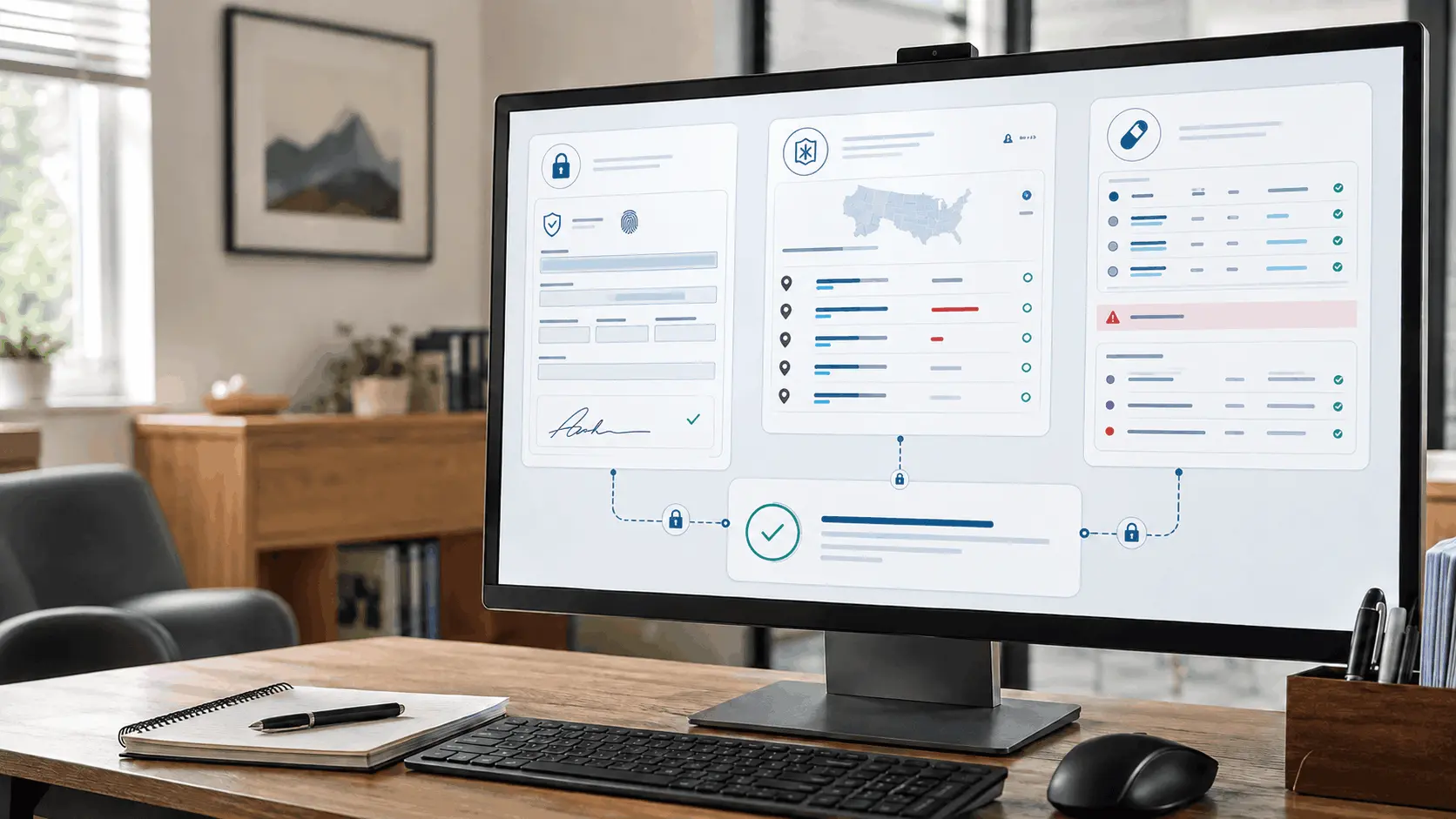
Prescribers have to input medication information across multiple documentation types, including the EHR, internal pharmacy data, state PDMP (Prescription Drug Monitoring Program), discharge paperwork, and more. When a clinician has to switch systems or input information manually, it takes longer to prescribe medication and the data may be less consistent.
ePrescribing for behavioral health helps providers synthesize these workflows into a connected system. It gives providers all the information they need at the moment when a decision needs to be made.
The Complexities of Behavioral Health Medication Workflows
Behavioral health medication management is a process that changes over time. Psychiatric prescribers manage multiple components, including medication trails for the PDMP, dose adjustment, and the timing of refills. They coordinate with therapists, case managers, and other providers, which becomes challenging when patients receive services across multiple settings or have both mental health and substance use needs.
For CCBHCs and other community-based organizations, several factors make medication workflows particularly challenging:
- Evolving treatment: Prescribers connect medication decisions with changing symptoms, goals, side effects, outcomes, and follow-up care.
- Fragmented medication information: Intake, referrals, hospital discharge, and care transitions can create incomplete or conflicting medical records.
- Controlled medications: Organizations may need secure EPCS (Electronic Prescribing of Controlled Substances) and state-specific PDMP review workflows.
Clinical directors need standardized workflows that don't add more burden to their teams. For example, it shouldn't cause them to leave the patient record, duplicate documentation, or navigate disconnected systems.
The Three Layers of Safer Behavioral Health ePrescribing
To safely utilize electronic prescriptions, providers need a workflow that supports controlled medications, provides relevant dispensing information, and gives a broader view of the patient's medical record. Together, EPCS, PDMP access, and medication history help prescribers make informed decisions with built-in safety checks.
Layer 1. EPCS: Secure Prescribing for Controlled Substances
EPCS is the process of electronically creating, signing, and transmitting prescriptions for medications regulated as controlled substances. It includes additional security safeguards beyond regular ePrescribing. Under DEA requirements, practitioners must use two-factor authentication and role-based logical access controls to electronically sign a controlled-substance prescription.
For behavioral health organizations, EPCS can support a more secure controlled-substance prescribing process while reducing reliance on paper, phone, fax, or separate manual workflows. Organizations should still ensure their processes align with applicable federal and state requirements, the prescribing authority, and internal policies.
Layer 2. PDMP: Controlled-Substance History at the Point of Care
Authorized prescribers can use PDMP data to review a patient's controlled-substance dispensing history as part of the prescribing decision. Within a connected workflow, PDMP integration can help prescribers:
- Review recent controlled-substance dispensing activity before prescribing a medication.
- Identify overlapping prescriptions or multiple prescribers that may need follow-up.
- Support consistent PDMP-review processes across providers, programs, and sites.
- Reduce the need to manually assemble relevant prescribing information.
A PDMP is not a substitute for professional judgment or a reason to make assumptions about a patient. Prescribers should interpret the information in context, discuss concerns respectfully with the patient when appropriate, and coordinate with other providers as needed. State laws and organizational policies can differ on when and how PDMPs must be checked.
Layer 3. Medication History: A Fuller Picture for Reconciliation
Medication History provides a view of a patient's active and prior medications. This includes prescriptions from other providers and medications that likely wouldn't be in a PDMP database. This information is critical for prescribers during:
- New patient intake
- Medication-management assessments
- Transfers between inpatient, crisis, and other settings
- Hospital or program discharge
- Referrals involving multiple providers
Incorporating medication reconciliation into care handoffs with a shared medication list creates one source of truth across services. A complete medication history helps identify omissions, duplicate therapies, dosing discrepancies, or outdated records.
What Integrated ePrescribing Can Help Behavioral Health Organizations Improve
Providers all want one thing: the best care for their patients. ePrescribing integrated within PlanStreet's Community-Based Care Platform can help providers:
- Make more informed prescribing decisions: Prescribers can review medication, controlled substances, and the patient record together.
- Reconcile medication: Medication histories help teams identify discrepancies during intake, transitions, and coordination.
- Reduce administrative friction: A connected workflow can minimize duplicate entry and the need to log in to multiple systems.
- Create better continuity across the care team: Medication actions can be viewed in the same place as treatment plans, notes, referrals, and care-coordination activities.
- Deliver more consistent controlled-substance workflows: EPCS and PDMP access can help organizations standardize review and authentication steps.
- Offer a better patient experience: Streamlined prescribing can reduce delays created by fragmented data and manual handoffs.
Questions to Ask When Evaluating Behavioral Health ePrescribing Software
For behavioral health organizations, the right ePrescribing software should connect to clinical documentation, controlled-substance workflows, and the broader care-management process. Before choosing your platform, ask the provider:
- Can prescribers complete routine prescriptions, renewals, refills, and discontinuations from the existing behavioral-health workflow?
- Does the solution support EPCS workflows for authorized controlled-substance prescribers, including required identity verification and authentication steps?
- Can authorized users access PDMP information and relevant medication history without leaving the patient record?
- Does the platform support medication reconciliation and provide safety alerts for potential drug interactions, allergies, and duplicate therapies?
- Does prescribing connect to diagnoses, treatment plans, progress notes, care plans, and care-coordination activities across programs and sites?
Organizations should also evaluate the platform's administrative foundation. Role-based access controls, documentation, reporting, and auditability can help clinical directors promote consistent workflows while giving authorized staff access to the information they need.
It is also worth asking whether the solution supports access and affordability workflows, including real-time prescription benefit information and electronic prior authorization. These capabilities can help prescribers identify coverage requirements and reduce delays between prescribing and treatment.
Connected Prescribing Supports Connected Care
Behavioral health ePrescribing ensures that electronic prescriptions are delivered safely and securely. EPCS provides added safeguards for controlled-substance prescribing, PDMP data gives clinicians relevant dispensing context, and medication history supports reconciliation across providers and care transitions.
When these capabilities are connected to the clinical record, behavioral health teams can spend less time searching for information, duplicating documentation, or switching between systems, and more time making informed, patient-centered care decisions.
PlanStreet's Community-Based Care Platform integrates ePrescribing with assessments, diagnoses, treatment plans, case notes, care plans, and care coordination for behavioral health and community-based organizations. Explore how PlanStreet brings behavioral health ePrescribing, EPCS, PDMP access, medication history, and care management into one connected workflow.
ePrescribing Frequently Asked Questions
ePrescribing in behavioral health enables authorized clinicians to create, manage, and electronically transmit prescriptions as part of psychiatric and community-based care. A connected behavioral-health ePrescribing workflow can link medication management to the patient's assessments, diagnoses, treatment plan, progress notes, care plan, and coordination activities rather than treating prescribing as a separate process.
EPCS software supports the electronic prescribing of controlled substances. Because controlled medications require heightened safeguards, EPCS workflows include requirements such as identity proofing and two-factor authentication for the practitioner signing the prescription. DEA regulations also require technical controls and digitally signed prescription records within a compliant electronic-prescribing application.
PDMP integration gives authorized prescribers access to state prescription-drug-monitoring information within or alongside their prescribing workflow. A PDMP is an electronic database that tracks controlled-substance prescriptions, helping clinicians review relevant dispensing history and identify information that may warrant closer review or care coordination. PDMP requirements differ by state and clinical situation.
A PDMP focuses primarily on controlled-substance prescription and dispensing information reported within a state program. Medication history provides a broader view of a patient's medication record, which may include active, historical, and previously prescribed medications from multiple sources. Together, they support a more complete medication-reconciliation and prescribing workflow.
Medication history helps behavioral-health prescribers understand the broader medication context before starting, changing, renewing, or discontinuing treatment. It can support reconciliation during intake and care transitions, help identify possible duplicate therapies or interaction concerns, and improve continuity when multiple providers or organizations are involved in a patient's care. Electronic medication-reconciliation tools are intended to help address medication discrepancies that can create risks during transitions of care.