Key Takeaways:
- When a case manager leaves, client context can leave with them, so continuity of care is an everyday priority.
- Current client summaries, clear case notes, and structured handovers with confirmed ownership help incoming staff pick up where others left off.
- PlanStreet’s platform supports this with case notes templates, referral tracking, a client portal, and permission-based sharing.
When a case manager leaves, their clients’ needs do not pause. Appointments, referral follow-ups, and benefits deadlines still require attention. However, the context behind them may leave with the employee. In a 2023 National Alliance to End Homelessness survey of 5,044 homelessness-services workers, 71% reported high employee turnover at their organizations.
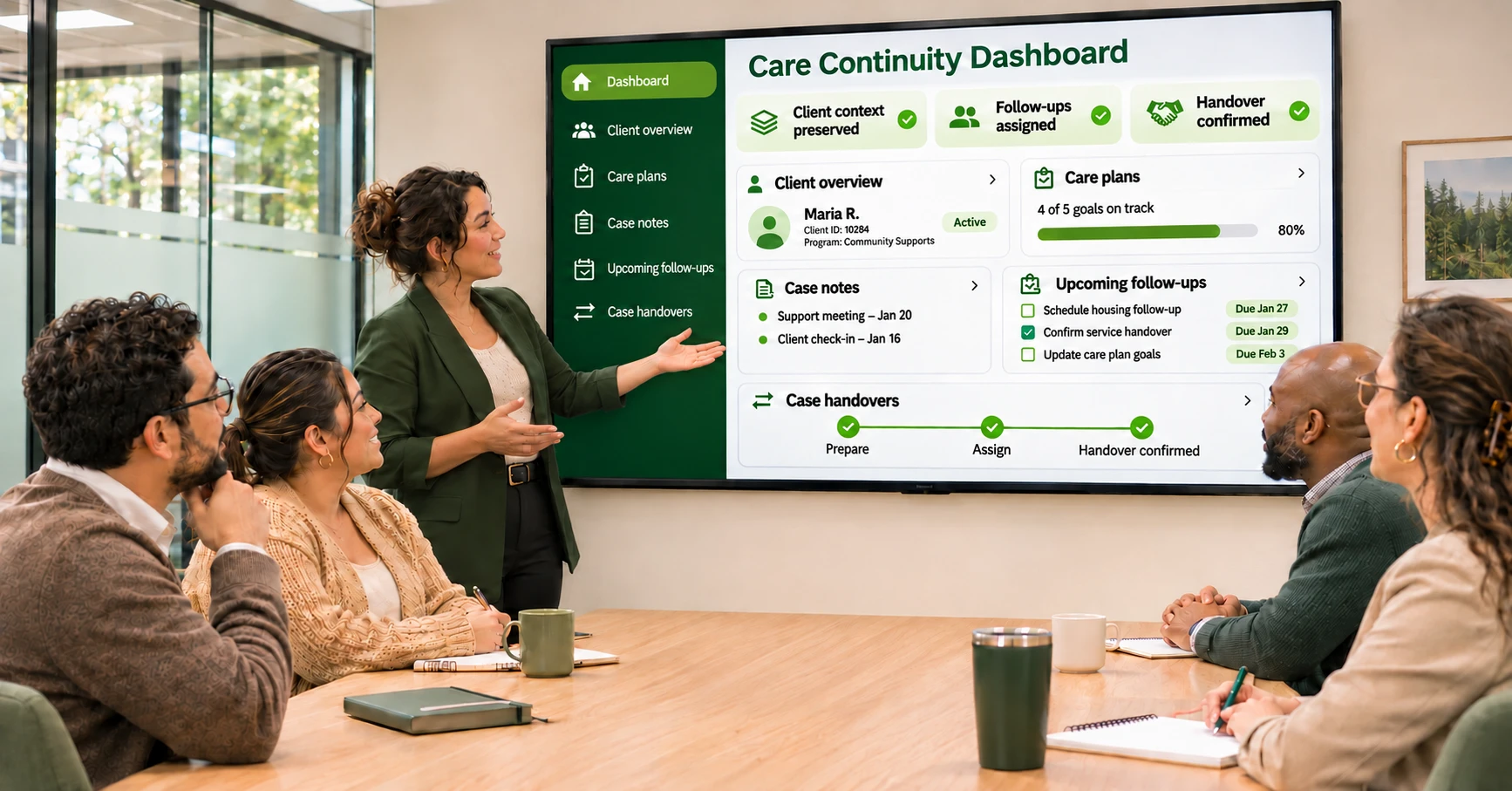
That makes continuity of care an everyday operational priority. Clear client records and structured handovers help incoming staff understand what has happened, why decisions were made, and who owns the next step. This article explores practical documentation and handover practices that help teams preserve knowledge and maintain support through case management staff turnover.
Why Staff Turnover Becomes a Continuity of Care Problem
Case manager handover can leave a gap between what an agency has recorded and what the departing social worker knew. An incoming colleague may see that a referral was made without knowing why it stalled or what the client agreed to do next.
That loss of context can create four practical problems:
- Undocumented decisions: Staff cannot understand why a particular approach was chosen.
- Incomplete histories: Important updates remain in personal notes or inboxes.
- Missed follow-ups: Pending referrals and deadlines lack a clear next action.
- Unclear ownership: A case is reassigned, but responsibility for outstanding work remains uncertain.
Timely, ongoing documentation, including the rationale for referrals and transfers, is critical to support communication and continuity of services. Strong records cannot replace adequate staffing, but they give incoming case managers a clearer starting point for continuing support.
How to Maintain Continuity of Care During Case Manager Transitions
A consistent transition process gives teams a shared approach to preserving case knowledge and coordinating next steps. Start by organizing the client record, use case notes to keep it current, and bring that information into a structured handover.
1. Organize Client Record Documentation Around Current Priorities and Next Steps
When preparing for a transition, consider: “Could an authorized colleague identify this client’s current priorities and next steps without contacting the departing case manager?”
A concise, dated summary linked to the underlying history gives incoming staff a starting point. The following six components can help teams organize that summary around the information needed to continue support:
- Current situation and client priorities: Summarize active needs, client-defined goals, communication preferences, accessibility needs, and recent changes.
- Relevant history and decision rationale: Highlight significant events, previous interventions, and outcomes, including why the team chose a different approach.
- Active care or service plan: Identify current goals, agreed actions, participating providers, and review dates. Link to the latest plan for additional detail.
- Outstanding work: List pending appointments, documents, referrals, applications, and deadlines. Include an owner and next action for each item.
- Consent and information-sharing boundaries: Make relevant permissions and restrictions easy for authorized staff to locate and verify.
- Responsibility and escalation: Identify the primary case manager, temporary coverage, and supervisor, along with circumstances requiring escalation.
For teams managing caseloads in social work, using a platform like PlanStreet can help you make configurable templates for client information, care plans, and case notes, elements that support a consistent approach to organizing records.
2. Use Consistent Case Notes to Capture Decisions and Follow-Ups
Consistent case notes help colleagues understand both the action taken and the reasoning behind it. Four prompts can guide everyday documentation:
- What happened? Record the contact, action, or service provided.
- What changed? Note progress, barriers, new information, or client preferences.
- Why does it matter? Explain the assessment and decision rationale.
- What happens next? Identify the action, owner, deadline, and circumstances requiring escalation.
For example, instead of “Referral followed up,” an illustrative note could read: “Housing referral remains pending because proof of income is missing. Client agreed to provide it Thursday. Case manager Jordan will submit it Friday and contact the supervisor if the submission deadline is at risk.”
Before carrying information into a new note or summary, confirm that it remains accurate. Updating records promptly also aligns with NASW Standard 10’s emphasis on timely documentation. These records then provide the foundation for confirming responsibilities during the handover.
3. Follow a Structured Handover to Confirm Ownership and Continue Support
A structured handover turns shared documentation into clear ownership. In a study across nine pediatric training programs, implementation of the I-PASS handoff bundle was associated with a 23% decrease in medical errors. Although this hospital finding does not establish outcomes for nonprofit case management, it shows how helpful structured handovers can be.
Adapt these five steps to your agency’s policies and each case’s level of risk:
- Review and prioritize the caseload: Identify urgent needs, approaching deadlines, active referrals, and cases requiring additional oversight.
- Confirm the record is current: Review the case summary and service plan. Flag missing or uncertain information so the receiving colleague knows what still needs verification.
- Assign and confirm ownership: Name the receiving case manager or interim owner, document the effective transfer date, and confirm acceptance of outstanding responsibilities.
- Discuss priorities and contingencies: For complex cases, pair the record with a conversation. Invite incoming staff to summarize next steps, ask questions, and confirm when to escalate concerns.
- Involve the client and check follow-through: Explain the staffing change, confirm contact arrangements, and verify that the first required actions occurred.
These steps adapt I-PASS principles, so you could tailor them further to meet the needs of your nonprofit or government agency. For example, supporting Medicaid coverage continuity means explicitly transferring responsibility for renewal notices, missing documents.
4. Measure Whether Handovers Are Protecting Continuity
Metrics give program directors and supervisors visibility into how transitions affect ongoing support. Using case management software analytics to track ownership, response times, and outstanding work can highlight where teams need additional capacity and which handover practices are working well.
Useful measures include:
- Percentage of transferred cases with an accepted owner.
- Percentage with a current summary and documented next action.
- Time from reassignment to the first required contact or action.
- Overdue follow-ups among transferred cases.
- Outstanding referrals with unknown outcomes.
Consistent denominators, reporting periods, and case groupings make comparisons more meaningful. Reviewing these trends alongside staffing capacity and case complexity helps teams interpret changes without attributing every delay to turnover.
Keep Client Support Moving Through Staff Changes With PlanStreet
When case managers change, incoming staff need access to the context, commitments, and outstanding work that shape each client’s support. PlanStreet’s Community-Based Care Platform brings these elements into shared workflows to support continuity.
- Preserve case context: Configurable care-plan templates, case boards, and task automation help teams organize goals, case notes, and assignments so incoming staff have a starting point.
- Keep referrals visible: PlanStreet’s closed-loop referral tools connect referrals to client records, tracking status, outcomes, pending actions, and follow-ups.
- Maintain client communication: The nonprofit client portal supports messaging, appointment scheduling, forms stored in case files, and client updates to contact information.
- Support supervisory oversight: Configurable reports and dashboards help supervisors review the information their organization captures and monitor locally defined priorities.
- Share information with appropriate access: PlanStreet supports granular permissions that limit employee access to data.
These capabilities give teams a shared foundation for case management transitions. Their value depends on the practices around them: current documentation, confirmed ownership, and supervisory review that keeps outstanding commitments moving forward.
Make Continuity Part of Every Case Manager Transition With PlanStreet
Staff changes are easier to navigate when client knowledge stays accessible and responsibilities remain clear. Current records, meaningful case notes, and confirmed ownership give incoming staff a foundation for continuing support. Together, these practices help teams preserve continuity without losing sight of each client’s priorities.
PlanStreet helps teams during case manager transitions by creating a single source of truth, keeping client information, shared documents, and pending tasks accessible to authorized staff. Incoming case managers can see what needs attention and continue coordinating support, while clients retain a familiar portal for communication and appointments.
Frequently Asked Questions
A practical contingency approach is to assign interim ownership and prioritize urgent needs and deadlines. Review authorized records, identify information gaps, and distinguish verified facts from assumptions. Where clarification is needed, coordinate with clients and relevant providers within applicable information-sharing boundaries.
Document the new assessment and its rationale without obscuring the earlier record. Explain what information or circumstances informed the change, involve the client where appropriate, and seek supervisory review when the disagreement affects safety or service planning. Accurate documentation should reflect the services provided.
Keep handover information relevant to service delivery and review applicable consent requirements, agency policies, and access permissions. Reassignment should not be treated as permission for unrestricted sharing. Protect privacy and include only information directly relevant to services.
Review missing information and unowned tasks alongside caseload complexity, available coverage, and overdue work. A case with clear next steps but no available staff suggests a different problem from one whose status cannot be established. Both issues may require attention during the same transition.